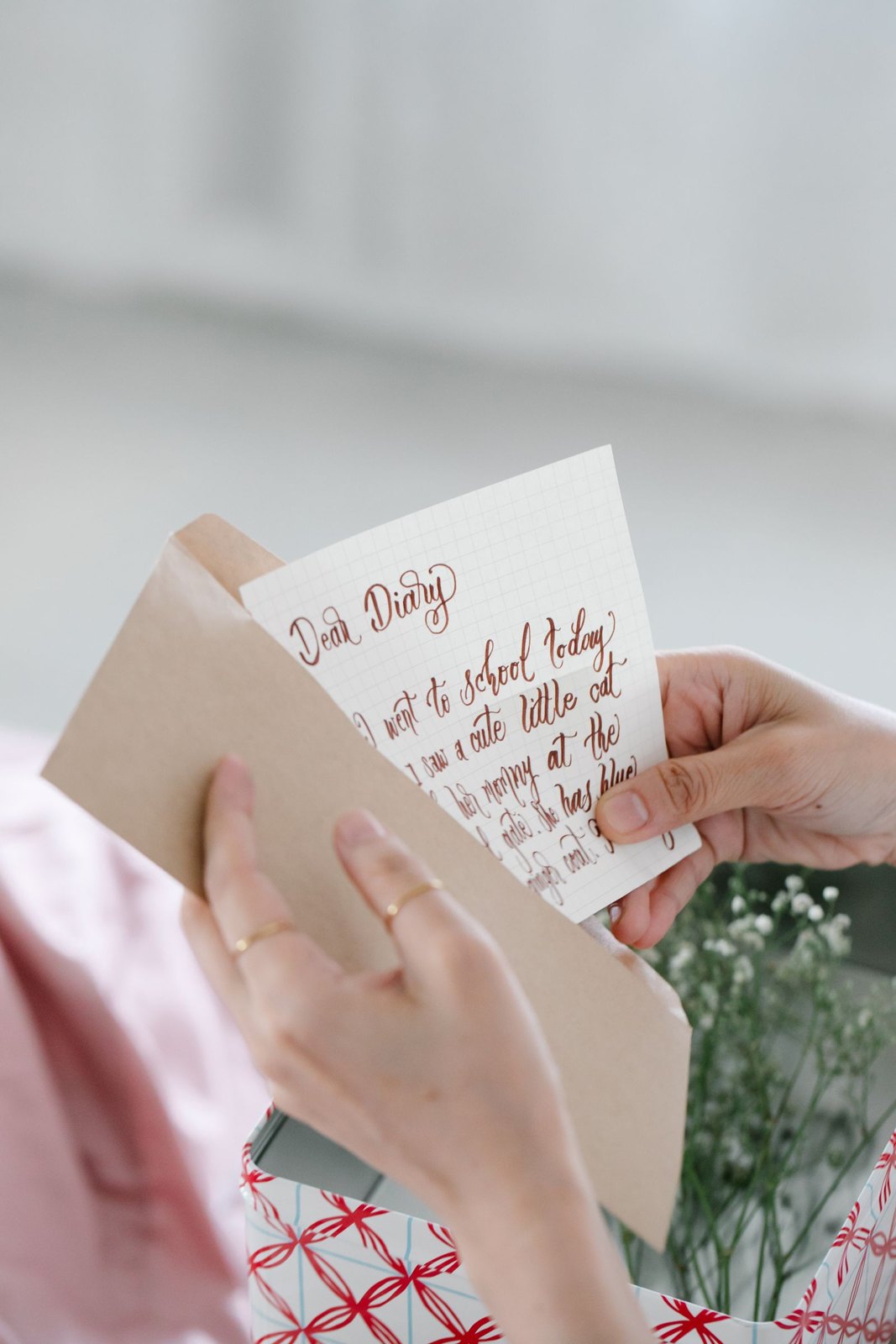
A handwritten letter can be the main gift rather than an explanation attached to something else. It asks for attention instead of a large budget, and it can hold details that would be difficult to say in a busy room. The task is not to write beautifully by someone else's standard. It is to put down something true that you want the recipient to be able to return to.
Decide what this particular letter is for
Choose a clear purpose before you begin: appreciation, a shared milestone or a collection of things you value about the person. A letter that tries to cover every year of a relationship can become difficult to finish. One focused intention gives you a useful way to decide what belongs on the page.
Consider how the recipient prefers to receive emotion. Some enjoy an expansive declaration; others are more comfortable with a small observation and a touch of humour. You can be sincere in either style. Use the voice you have together, rather than the voice you imagine a keepsake letter ought to have.
Collect details before shaping sentences
Write a rough list of moments, habits and phrases you associate with the person. Include ordinary things: a regular phone call, an unexpected kindness, a familiar journey or a meal you still mention. Choose two or three that support the purpose of the letter and leave the rest for another occasion.
Describe what happened and why it matters to you. 'You waited with me until the bus came' gives a memory a shape; 'I felt less alone that evening' explains its meaning. Keep the account accurate, allowing for the fact that the other person may remember the event differently.
Leave room for the recipient's own feelings
Avoid using the gift to ask for forgiveness, resolve a dispute or require a particular response unless that is openly the purpose of a separate conversation. A birthday or anniversary letter should not unexpectedly become a demand. Appreciation is easier to receive when the person can simply take it in.
Likewise, be careful with sweeping claims about what the relationship will always be. You can express hope and commitment in your own terms without writing the other person's feelings for them. Specific gratitude often carries more weight than promises so large that neither person could meaningfully guarantee them.
Choose materials that make reading easy
Use paper that feels comfortable to write on and a pen you have tested on an offcut. Leave margins, space between paragraphs and enough room for your natural handwriting. There is no need for calligraphy. Legibility matters more than decorative flourishes, especially across several pages.
Number the pages if the letter is long, and include the date. Draft separately if that helps you relax, but do not rewrite endlessly in pursuit of a flawless object. A small correction can belong to a personal letter. Make a fresh copy only if the text has become difficult to follow.
Let the handover stay simple
Place the letter in an envelope and tell the recipient they can read it when they have a quiet moment. Public reading should be their choice. If you add a photograph or another small object, explain its connection briefly and avoid making the letter feel secondary to the packaging.
Keep a copy only if that feels appropriate to the relationship and the privacy of the contents. Then allow the letter to stand on its own. The recipient may respond at once, much later or through an ordinary conversation; none of those possibilities measures how much the gift meant.