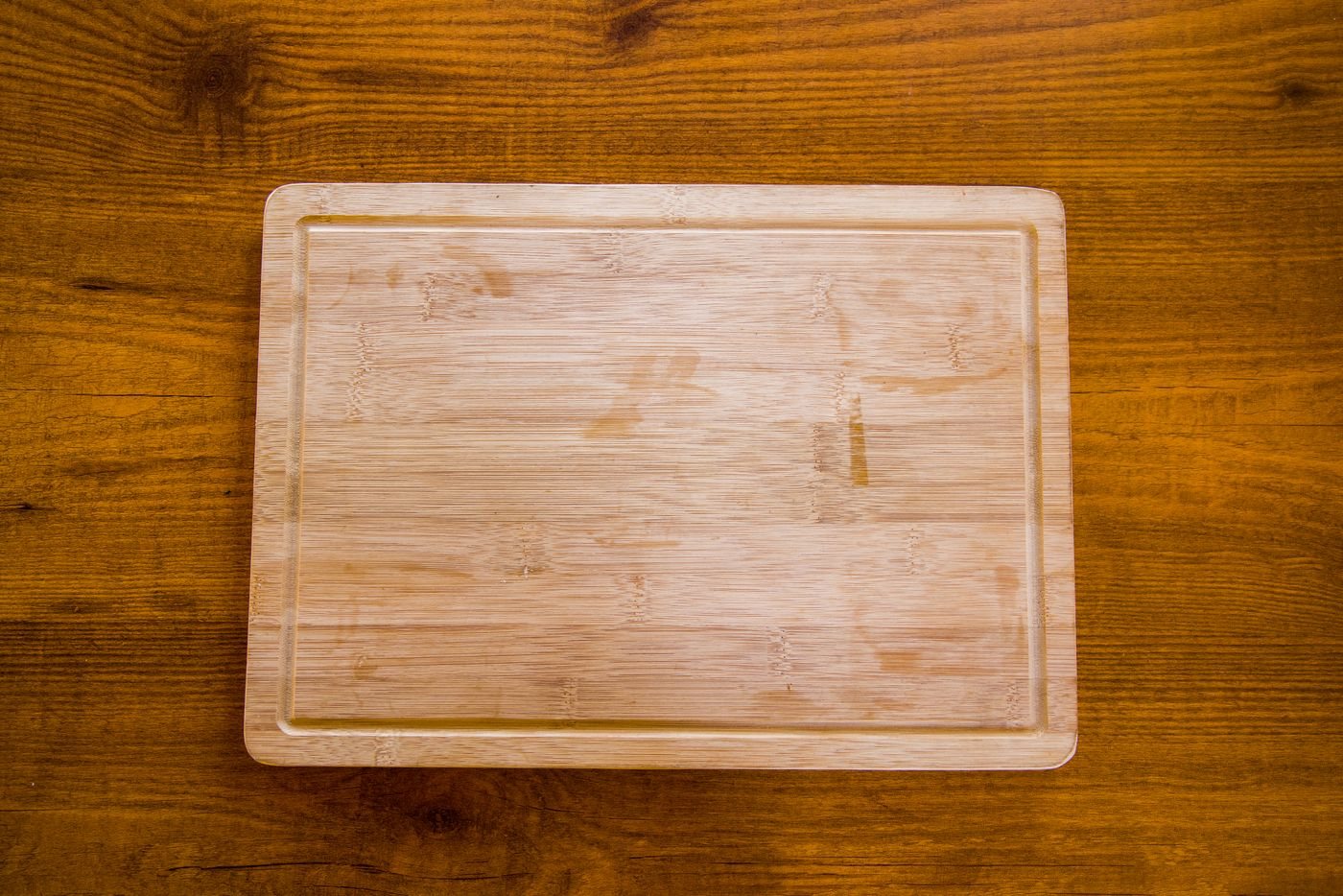
A chopping board can be a handsome gift, but the recipient has to lift it, wash it and find somewhere to store it. Those practical details often matter more than choosing between a solid-wood and bamboo label. Both categories contain different constructions and finishes, so compare actual products rather than assuming one material is always superior. Begin with the cook’s workspace, the food they prepare and how much maintenance they are comfortable doing. Decoration should come after those questions.
Measure the working space
A large board offers preparation room but may be awkward in a small sink or on a narrow counter. Check dimensions and weight, including whether handles or grooves make it easier to lift. A board that feels reassuringly substantial in a shop can become cumbersome when wet.
Consider storage as well as use. Does it fit in the cupboard or stand securely where the recipient keeps boards? Avoid buying a display-sized board for someone who clears the counter after cooking. If the present is mainly for serving, describe that purpose clearly rather than assuming it will also become their everyday chopping surface.
Look at the whole construction
Read how the board is made, what finish it has and whether the maker identifies it as suitable for food preparation. Bamboo boards and wooden boards can both be assembled from sections, so the material name alone does not tell you about joints, adhesives or finish quality.
Inspect the surface and edges if possible. Look for a stable shape, smooth handling areas and clear care instructions. Do not infer environmental credentials solely from the plant or tree used. If that issue matters to the recipient, seek specific, verifiable information from the manufacturer.
Budget for the care it actually needs
Many wooden boards require hand washing and appropriate drying, with treatment according to the maker’s instructions. John Boos, for example, provides particular maintenance guidance for its own boards. Use the instructions for the chosen product rather than transferring one brand’s oiling schedule to every board.
Do not include household cooking oil as a generic care solution. Ask what treatment, if any, is recommended and suitable for the finish. If the recipient strongly prefers dishwasher cleaning, a board with incompatible care requirements is unlikely to be a welcome everyday gift, regardless of its appearance.
Place personalisation away from the main task
An engraved design can look attractive on a serving face or edge, but consider how it affects cleaning and usable space. Ask the maker about intended use before ordering. A small inscription on a suitable area may be more practical than a large central design.
Include the original care information and let the recipient decide how the board joins their existing food-preparation routine. A board should complement the tools and cleaning practices they already use.