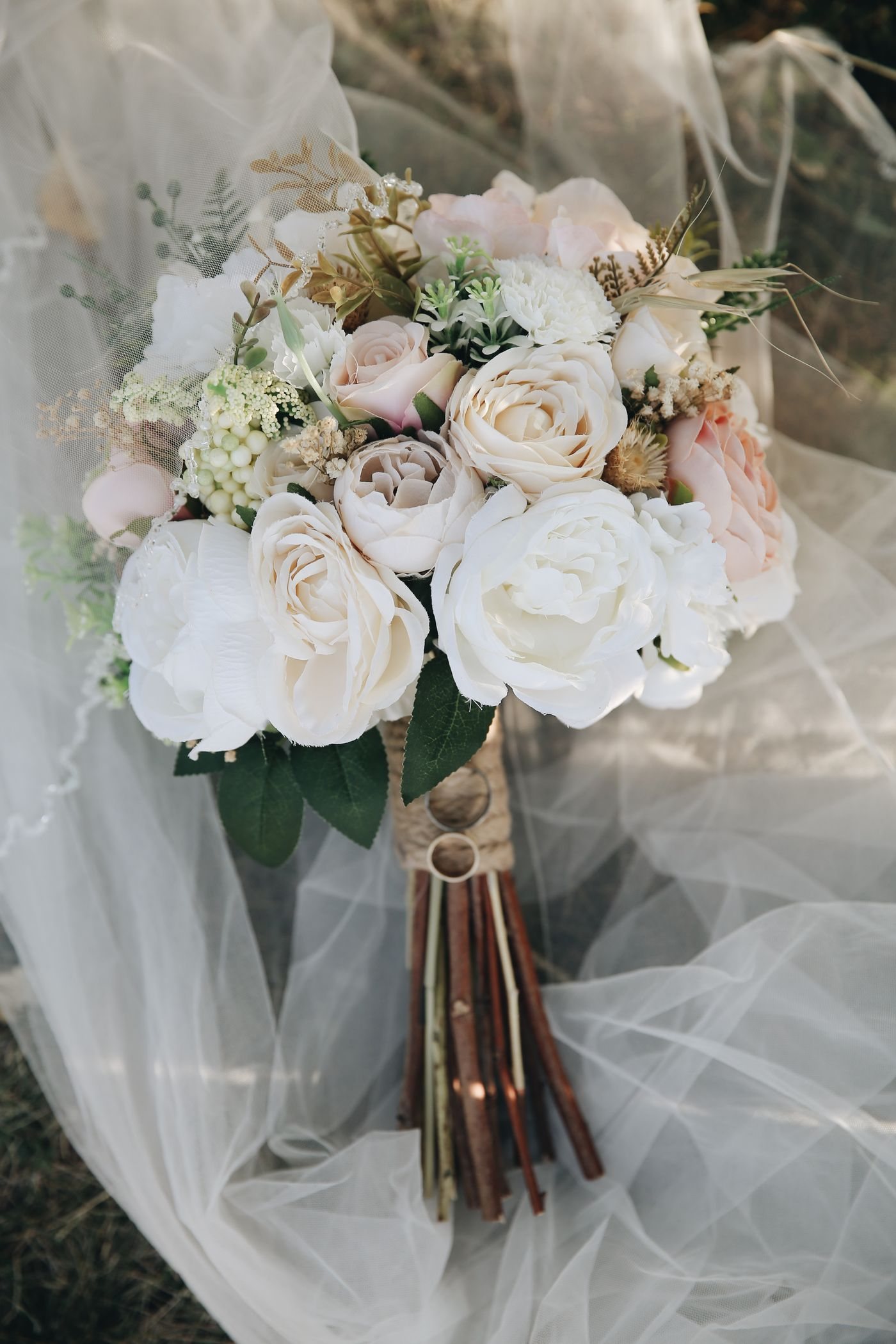
A wedding bouquet is a fleeting arrangement, and an illustration offers one way to remember its shape and colours after the day. The most convincing commission begins with useful references rather than a single distant photograph. Think about whether the recipient values a botanical likeness, a loose impression or a picture that includes the ribbon and hands holding it. That choice will guide both the artist's brief and the kind of images you need to collect.
Gather photographs that answer different questions
Choose one main image showing the overall bouquet, then add closer views of distinctive flowers, foliage and the ribbon. Tell the artist which image should determine the composition. Wedding photographs may have warm filters or coloured lighting, so include a neutrally lit reference if colour accuracy matters. If you know the florist's flower list, supply it as supporting information rather than expecting the artist to infer every variety from a blurred petal. Check permission before sharing professional photographs for use as commission references, and avoid sending an entire private wedding gallery unnecessarily.
Decide what should remain in the picture
Some people want the bouquet alone against a plain background; others associate it strongly with a particular ribbon, brooch or family detail. Identify those elements explicitly. Removing the hands or dress can change the arrangement's shape, so ask how the artist would handle that transition. Do not request additions that imply flowers were present when they were not unless you are deliberately choosing a creative interpretation. A portrait of the actual bouquet and a new floral composition are both valid gifts, but they tell different stories.
Compare styles at the intended scale
Fine botanical detail can be lovely in a larger work but disappear in a small print. A loose watercolour may convey the overall colour balance without identifying every stem. Look at examples from the artist in the same medium and approximate size you intend to order. Confirm whether you receive an original, a print or a digital file, and what revisions are included. Ask when you will see a compositional sketch and whether colour changes can still be made at that stage. These questions are easier to settle before work begins.
Keep the caption secondary
Names and a wedding date can sit on a separate mount or card if you want the illustration to remain primarily artwork. Check the date and preferred names with someone who knows the couple's choices. Leave time for printing or drying, framing and delivery rather than counting only the artist's working days. If the gift is a surprise anniversary commission, consider the couple's current home and wall space. A manageable framed piece is more likely to be displayed than a large format chosen solely because the occasion feels important.