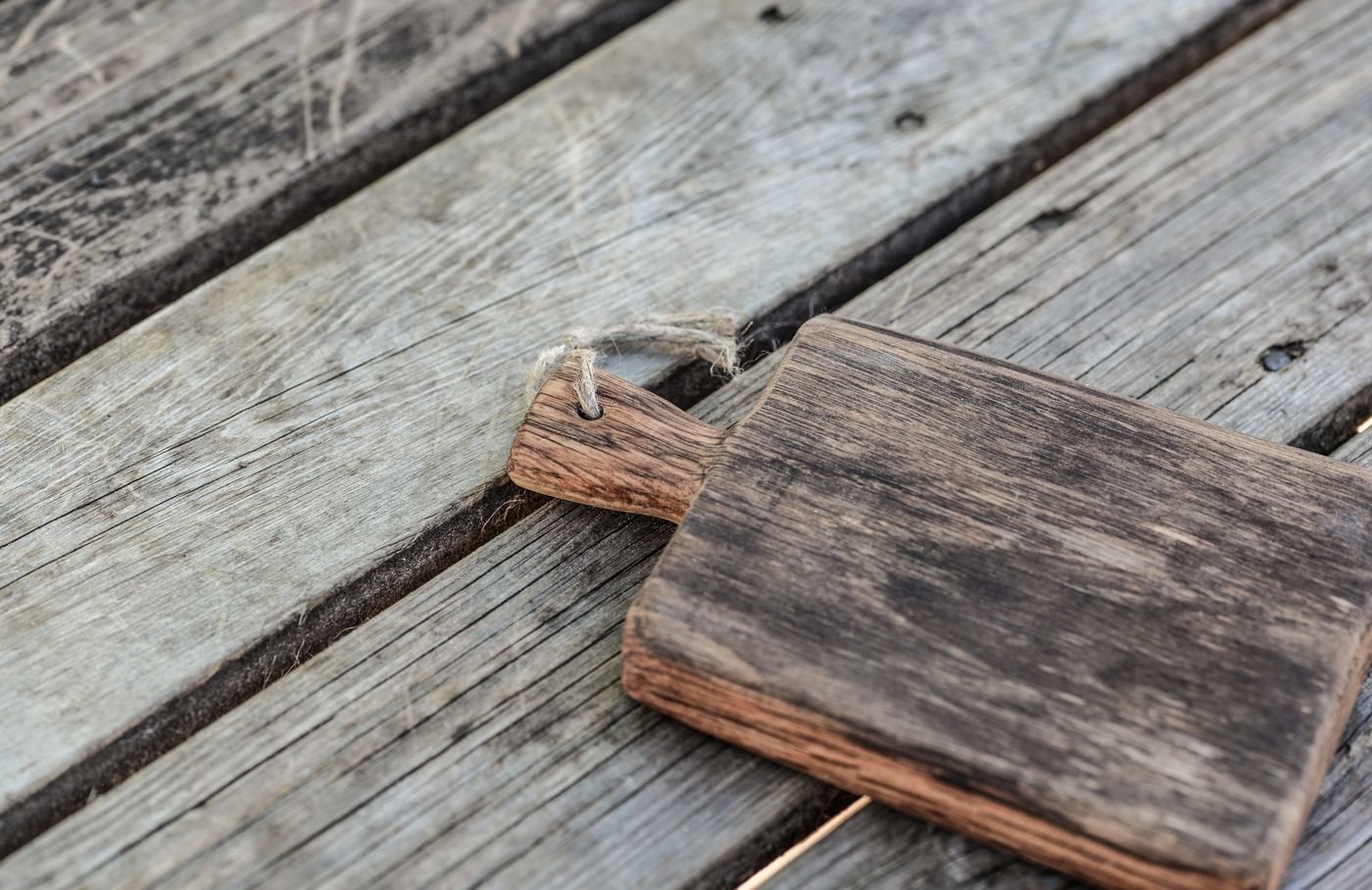
A personalised chopping board sits between a kitchen tool and a keepsake, and those roles do not always need the same design. A cook may want a broad, plain working surface, while someone who hosts occasionally might enjoy an engraved serving side. Decide which role matters most before choosing a quotation. The board should fit the recipient's worktop, sink and storage space as comfortably as its inscription fits the available wood.
Decide which side will do the work
Ask the maker whether the board is intended for chopping, serving or display. A deeply engraved central design may be attractive on a serving face but less convenient for preparing ingredients. If the construction allows two working faces, keeping the inscription on one side can give the recipient a choice. Check whether feet, a hanging hole or a juice groove limit that arrangement. Photographs taken from above can hide these details, so look for an edge view and a description of the usable area.
Measure the ordinary kitchen tasks
Use an existing board as a reference rather than selecting the largest option within budget. A heavy board can feel stable but be awkward to wash or lift into a cupboard. A small one might suit slicing bread yet offer little room for a full meal's preparation. Think about grip, storage height and the available drying position. If you are buying for someone with limited hand strength, discuss weight directly; usefulness is more important than keeping every specification a surprise until the parcel is opened.
Read the care instructions before buying
Wooden boards generally require more considered care than simply joining every other item in the dishwasher. Follow the instructions for the actual product and finish. John Boos, for example, supplies cleaning and conditioning guidance for its own boards; its schedule should not be treated as a universal rule for all makers. Ask what oil or treatment is approved for the board you choose. If the recipient prefers dishwasher-only kitchenware, a wooden keepsake may be better presented as a serving or display piece rather than an everyday workhorse.
Use a design that survives changing kitchens
A surname is optional, especially for a household whose members use different names. Initials, a short phrase linked to shared meals or a small original illustration can feel more inclusive. Proof punctuation and dates at the intended size, and ask how variations in grain affect the engraving's contrast. Natural wood will not match a digital mock-up exactly. Add a card explaining the board's intended use and keep the care leaflet with it. Avoid covering the surface in adhesive decorations that the owner must remove before using it.